
Many of the hydrological processes we are interested in are difficult to measure in the field and have been scarcely documented in the cold and humid climate of eastern Canada. We therefore need to be creative and bold in designing experimental setups that allow us to monitor them in situ.
Instrumentation
Motivation


A few examples of our work
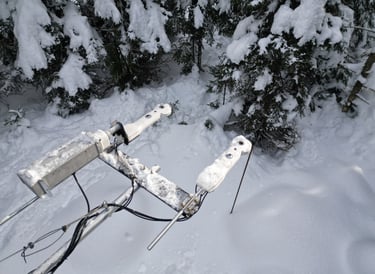
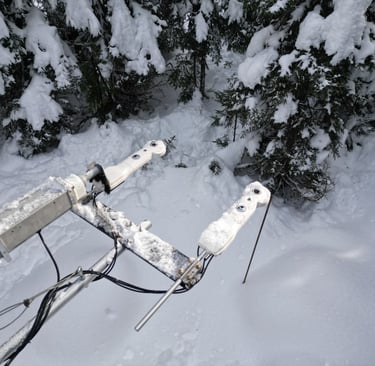
This device automatically removes snow that accumulates on radiometers in winter, improving the quality of energy balance measurements in snowy, low-wind environments.

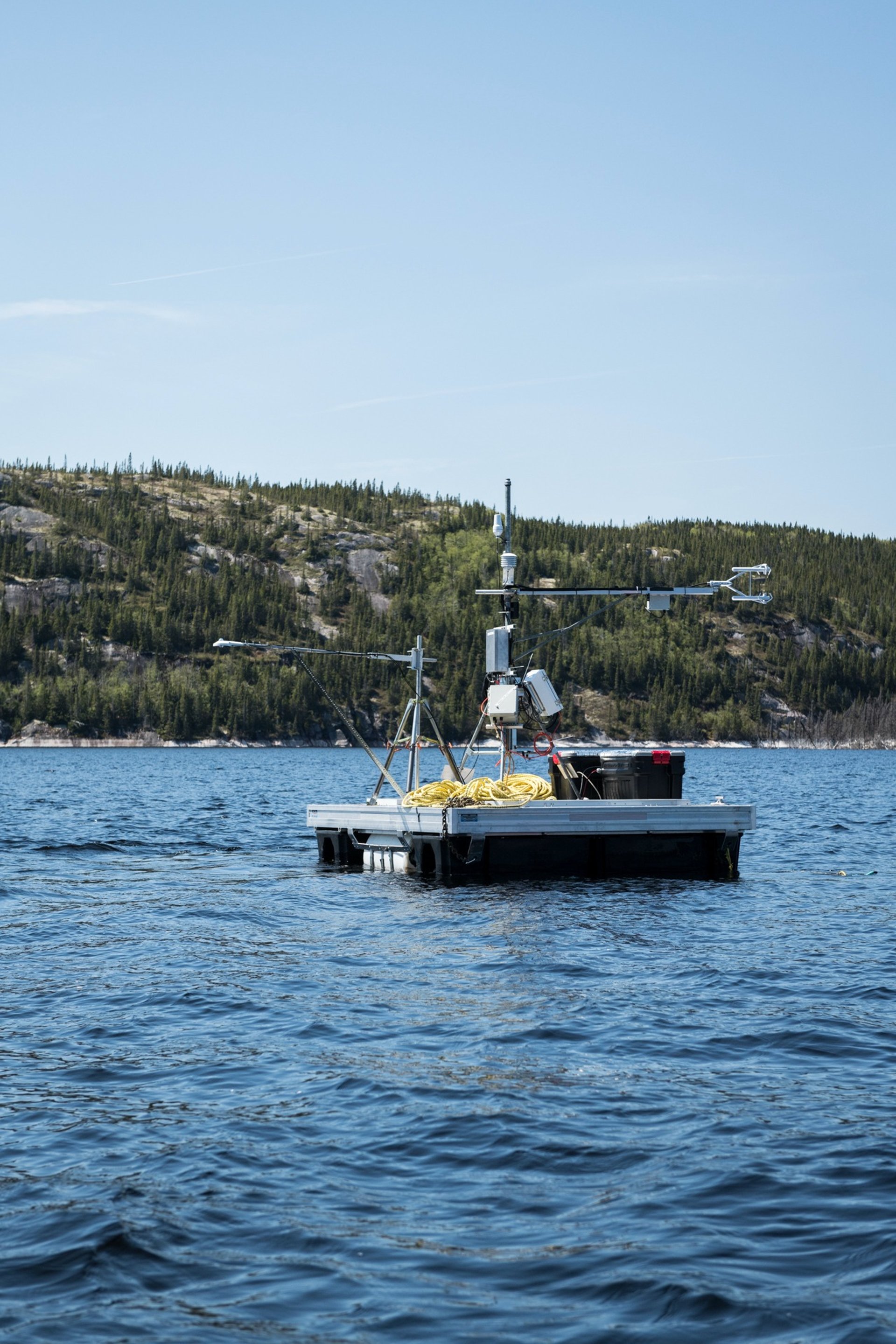
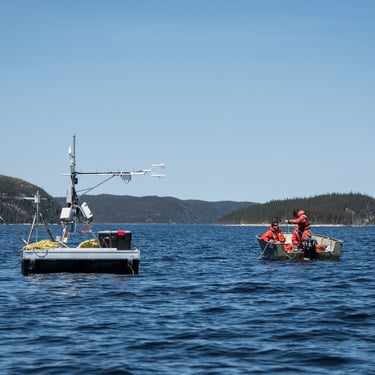
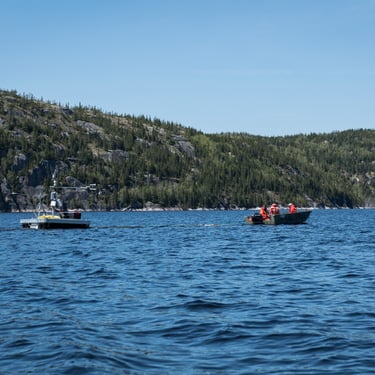
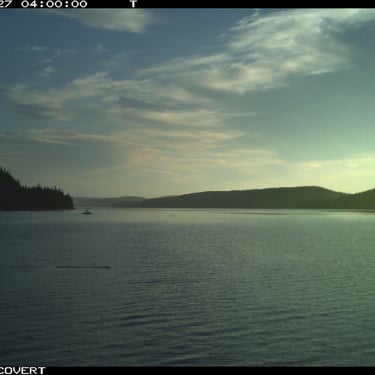
We deployed an eddy-covariance system mounted on a floating dock to monitor evaporation during the open-water season on the Romaine-2 reservoir, following water level fluctuations that can exceed 10 m.
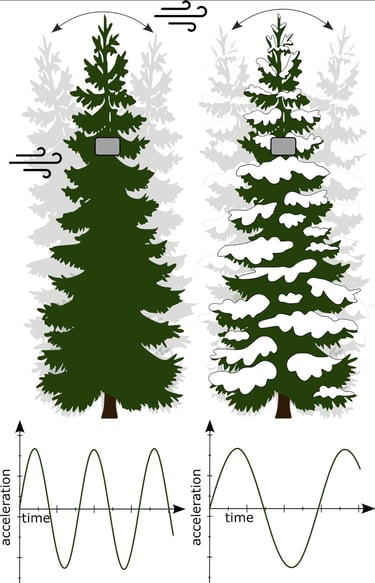
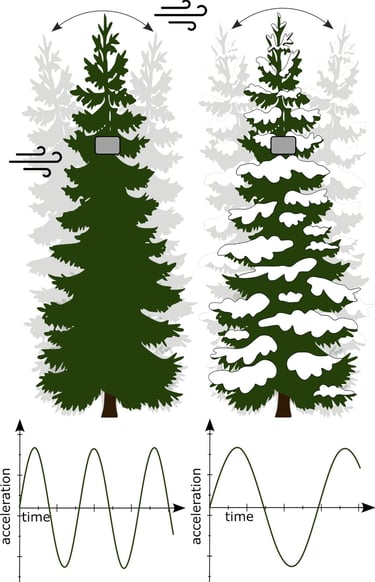
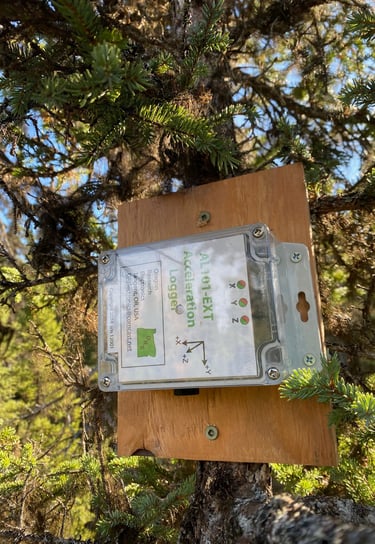
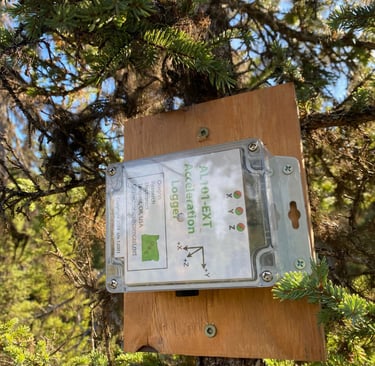
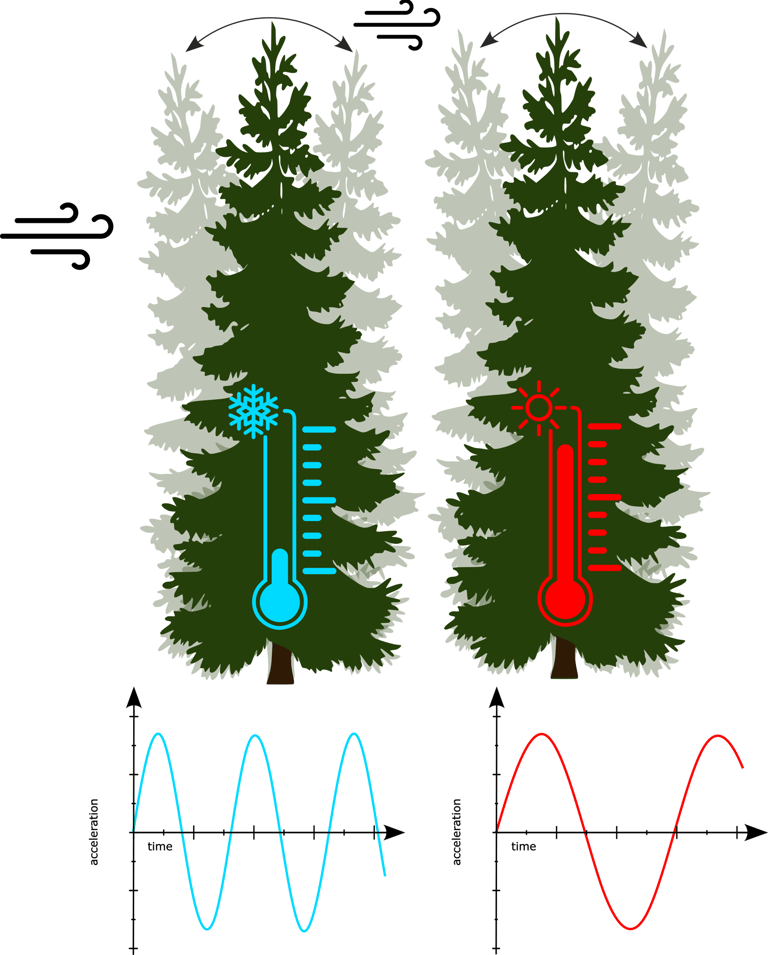
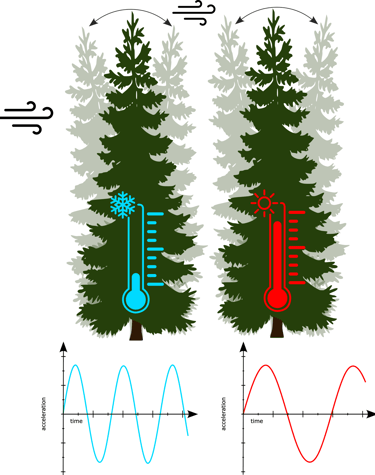
Here, we measure how the oscillation frequency of a tree changes as it is loaded with snow, in order to derive a time series of snow intercepted by the canopy.
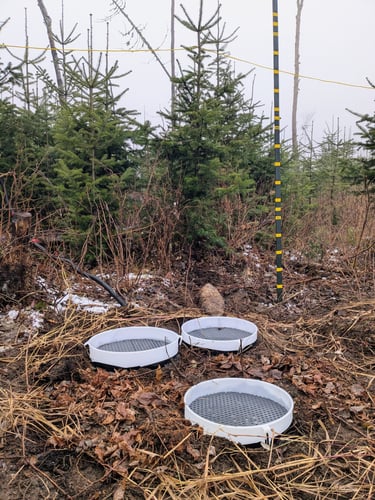
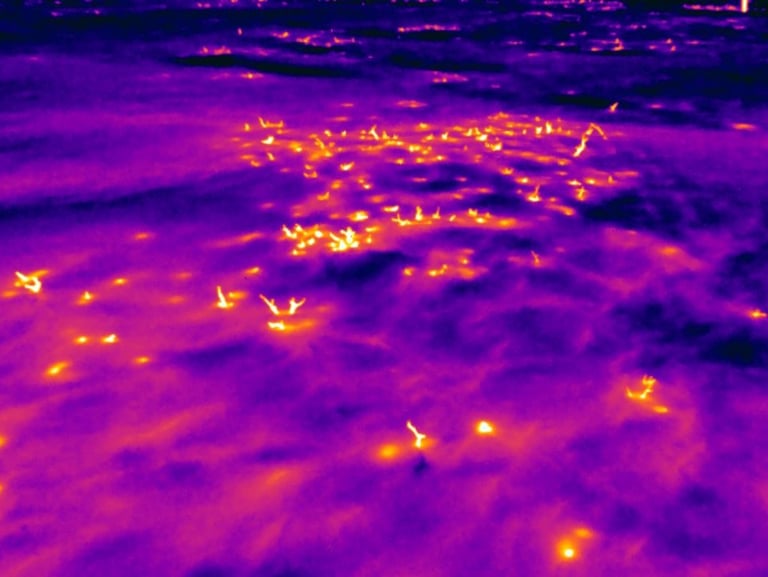
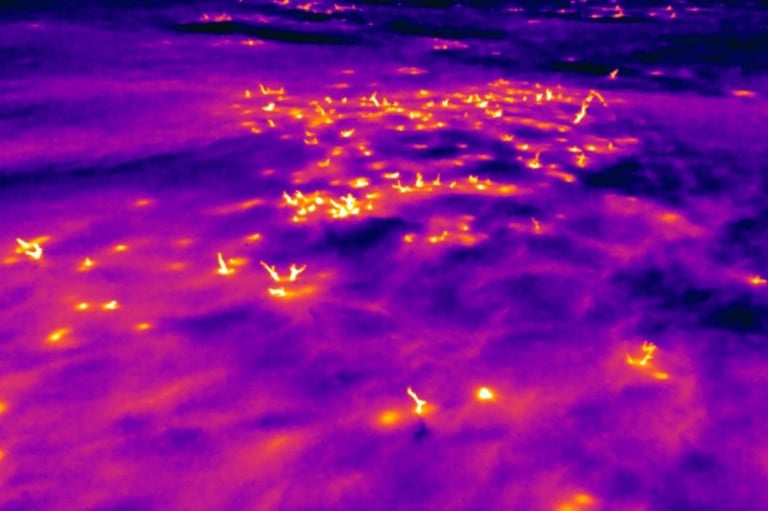
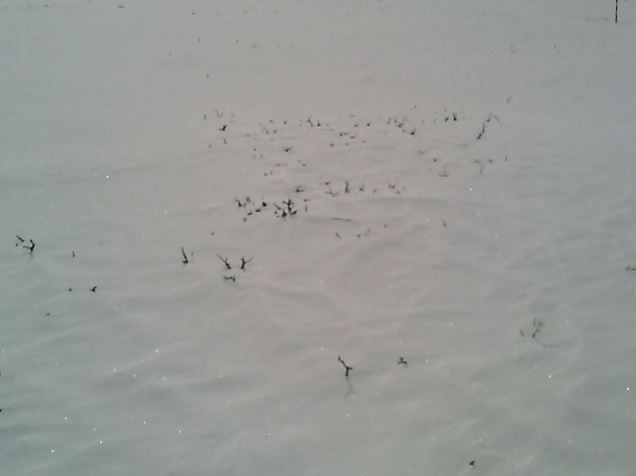
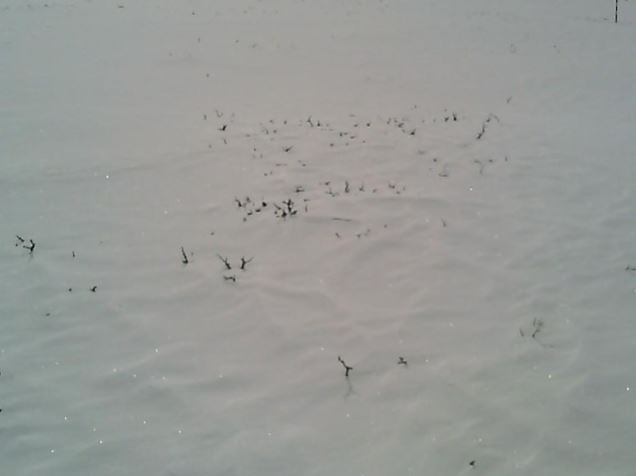
We measure the spatial variability of surface temperature in the presence and absence of shrubs in order to infer their impact on the ground thermal regime.
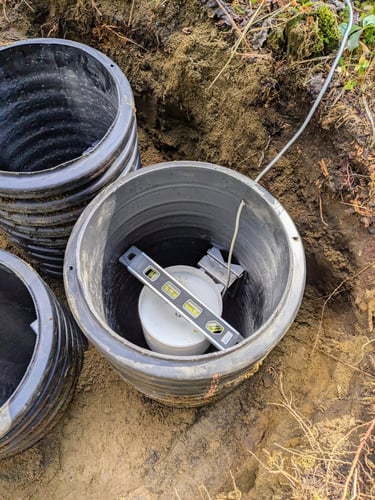
Thanks to these snow lysimeters, we can continuously measure the amount of water released at the base of the snowpack and thus infer the hydrological response to events such as rain-on-snow.
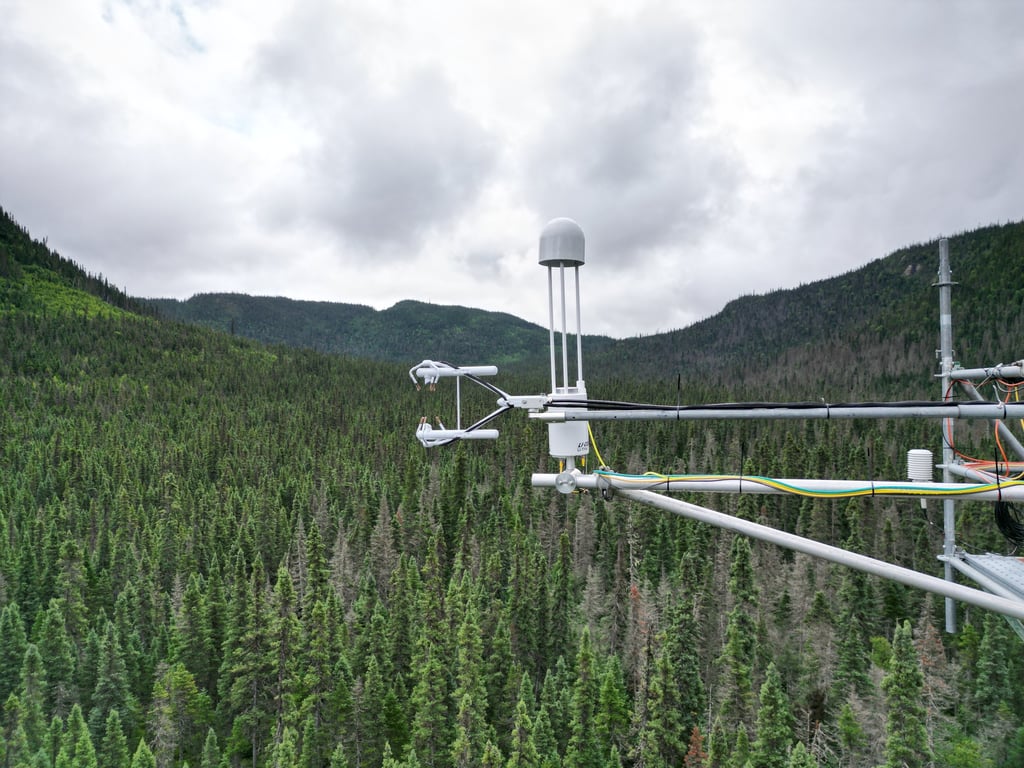
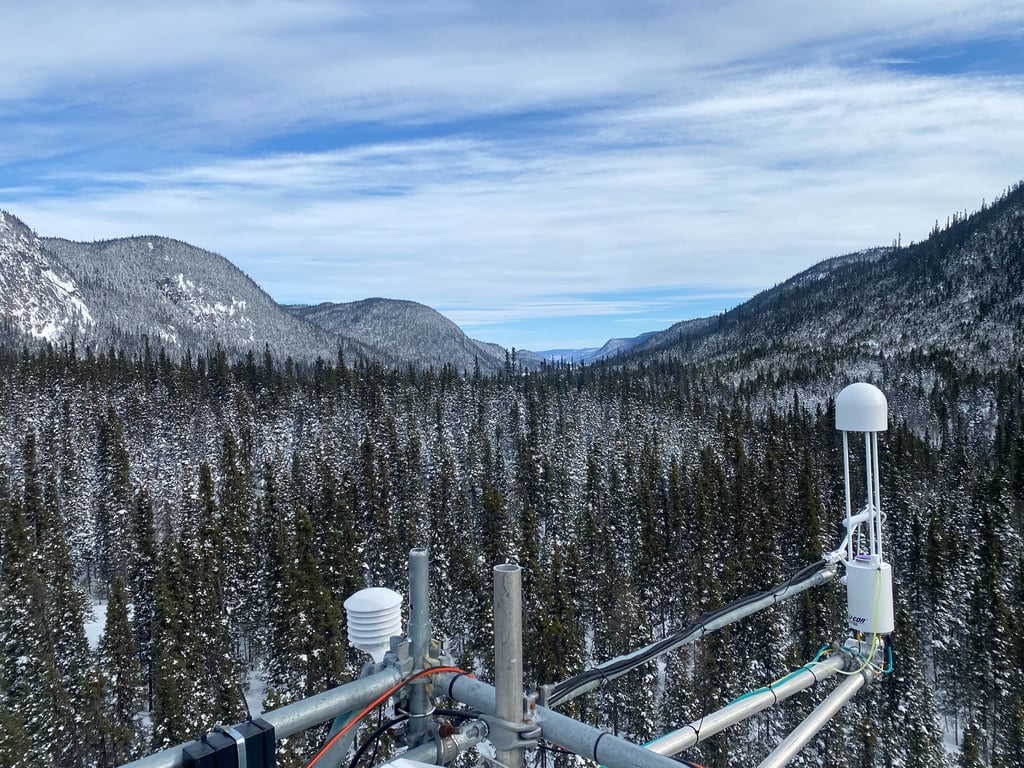
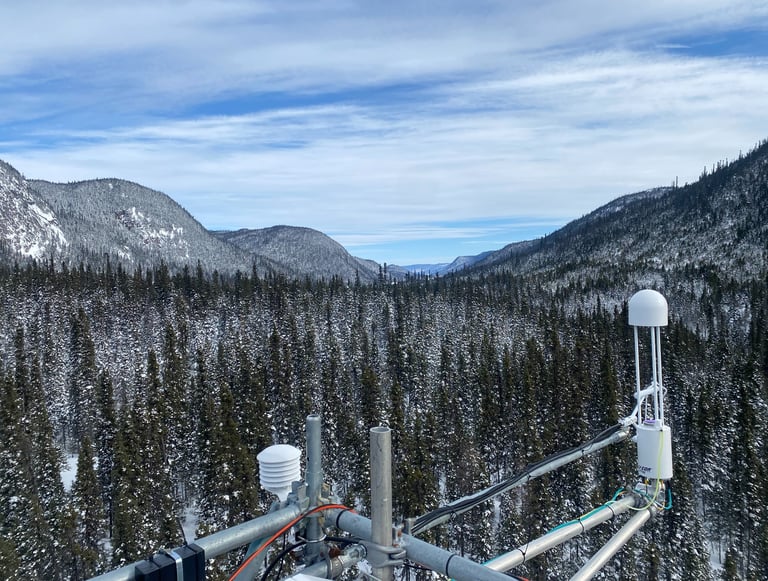
This instrument is a microwave scintillometer, which allows us to estimate evaporation at a larger spatial scale than the traditional eddy-covariance approach. We tested this system over the Romaine-2 reservoir.
We also have several other, more traditional instruments deployed in the field.
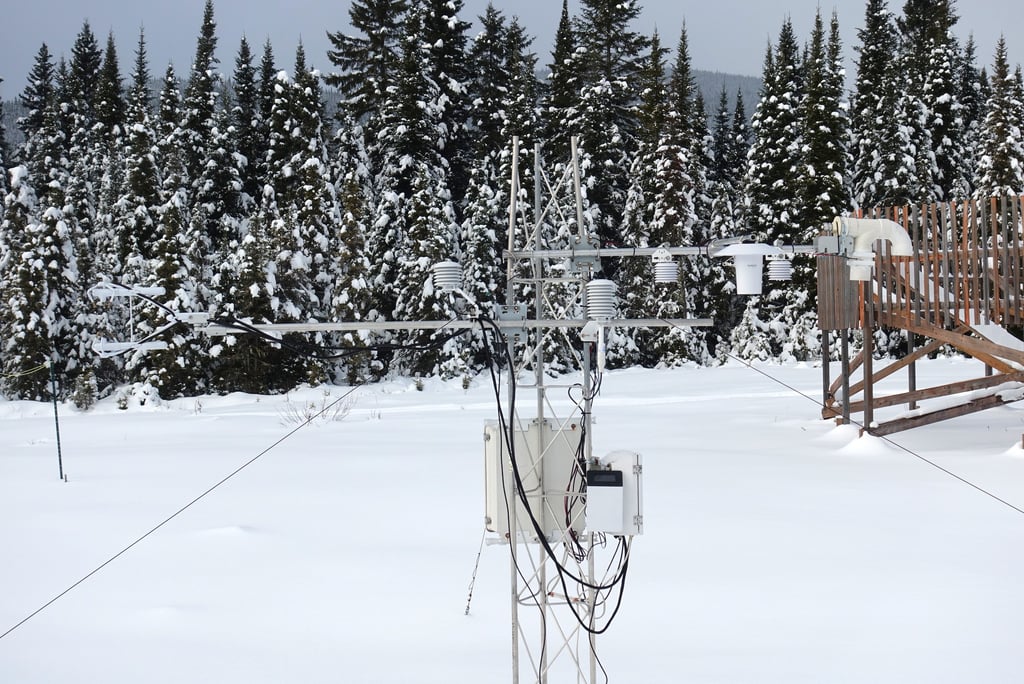
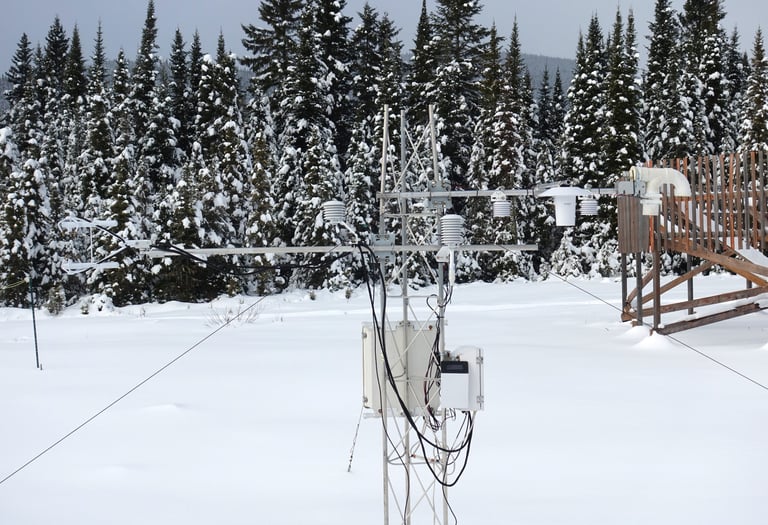
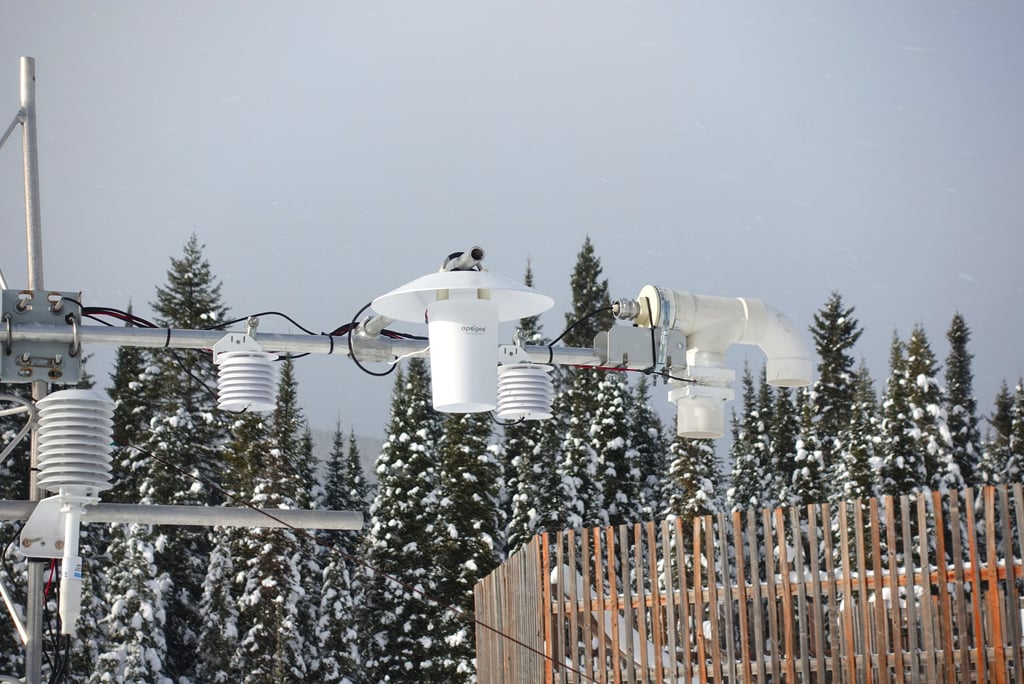
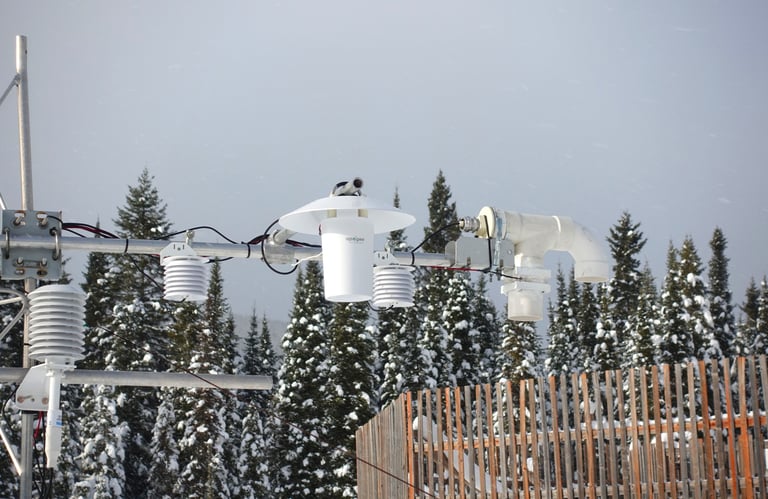
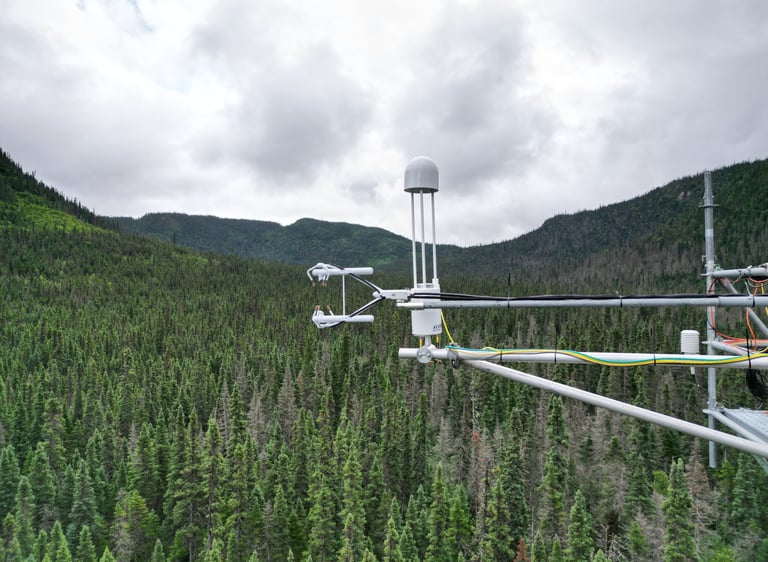
Here, we compare different air temperature sensors to assess the importance of forced ventilation during measurements.
Photo and video of the snow-sweeper in operation – See the work of Jérémie Labelle
Instrumented floating dock on the Romaine-2 reservoir
(photo credit: Hydro-Québec)
Diagrams of the method and accelerometer installed on a tree – See the work of Emmanuelle Barrette
Visible and thermal images of shrub branches emerging from the snow cover – See the work of Étienne Tremblay
Snow lysimeter – See the work of Dmitry Pershin
Microwave scintillometers installed on a flux tower in the Bernard River Valley
(photo credit: Antoine Thiboult)
3D sonic anemometer and non-ventilated / ventilated air temperature sensors installed at the Snow site in the Montmorency Forest (photo credit: Étienne Tremblay)
Contact
© 2026. All rights reserved.
Pavillon Adrien-Pouliot
1065, avenue de la Médecine
Québec (Québec) G1V 0A6