Lakes and reservoirs are a defining feature of the boreal environment. In Canada alone, more than two million of them are found across nearly 8% of the country’s total area.
Motivation
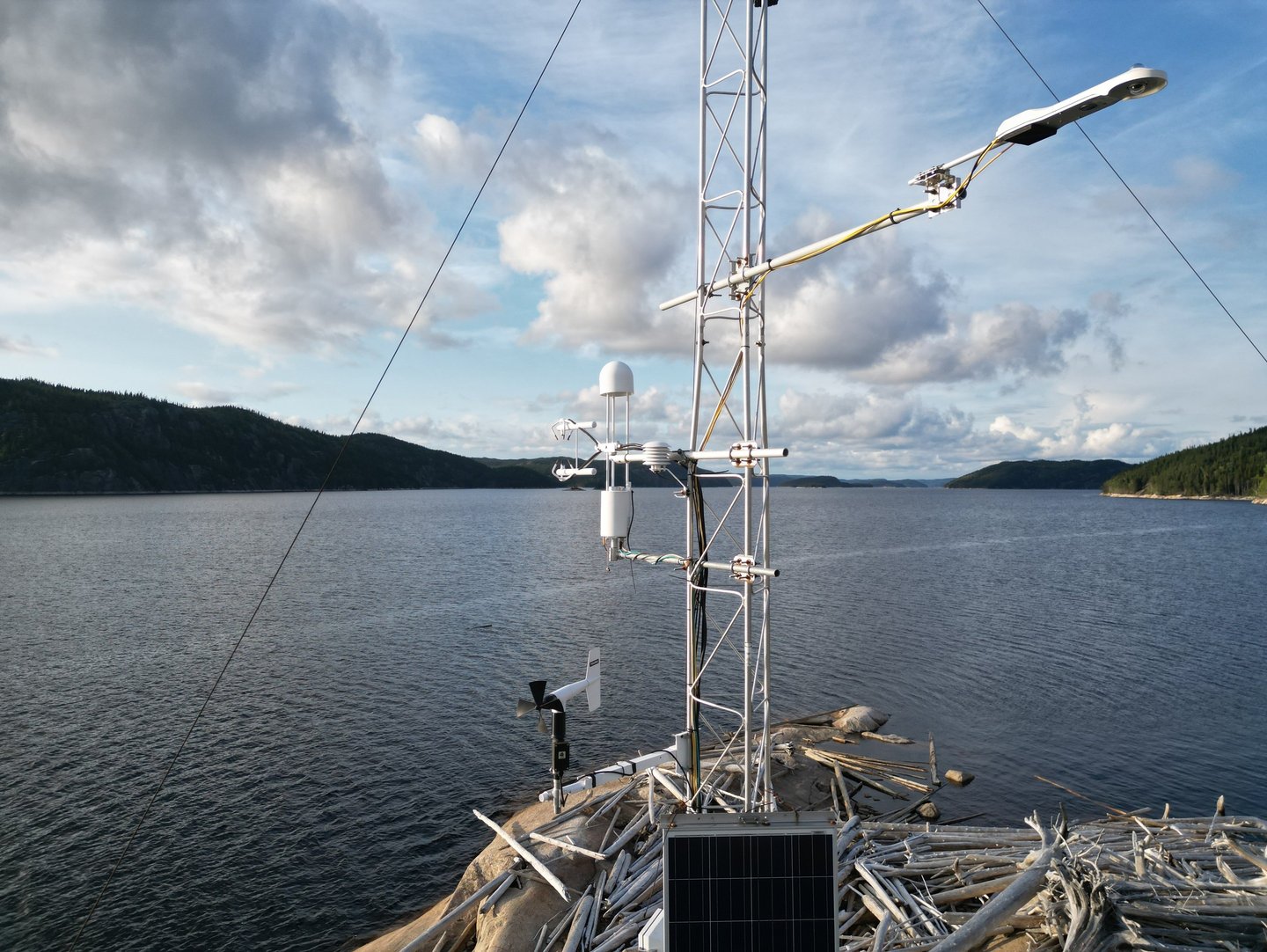
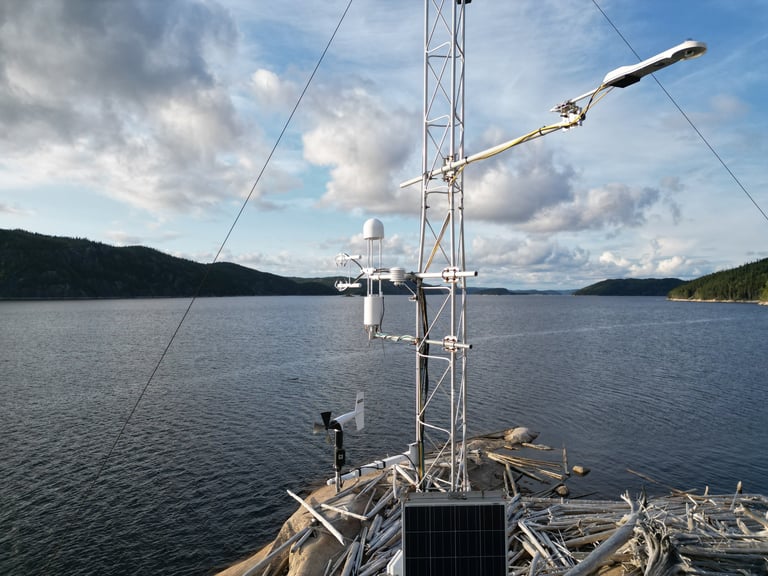
We are interested in evaporation from lakes and reservoirs, which we measure directly using flux towers deployed both in the middle of these water bodies and along their shores.
Our work
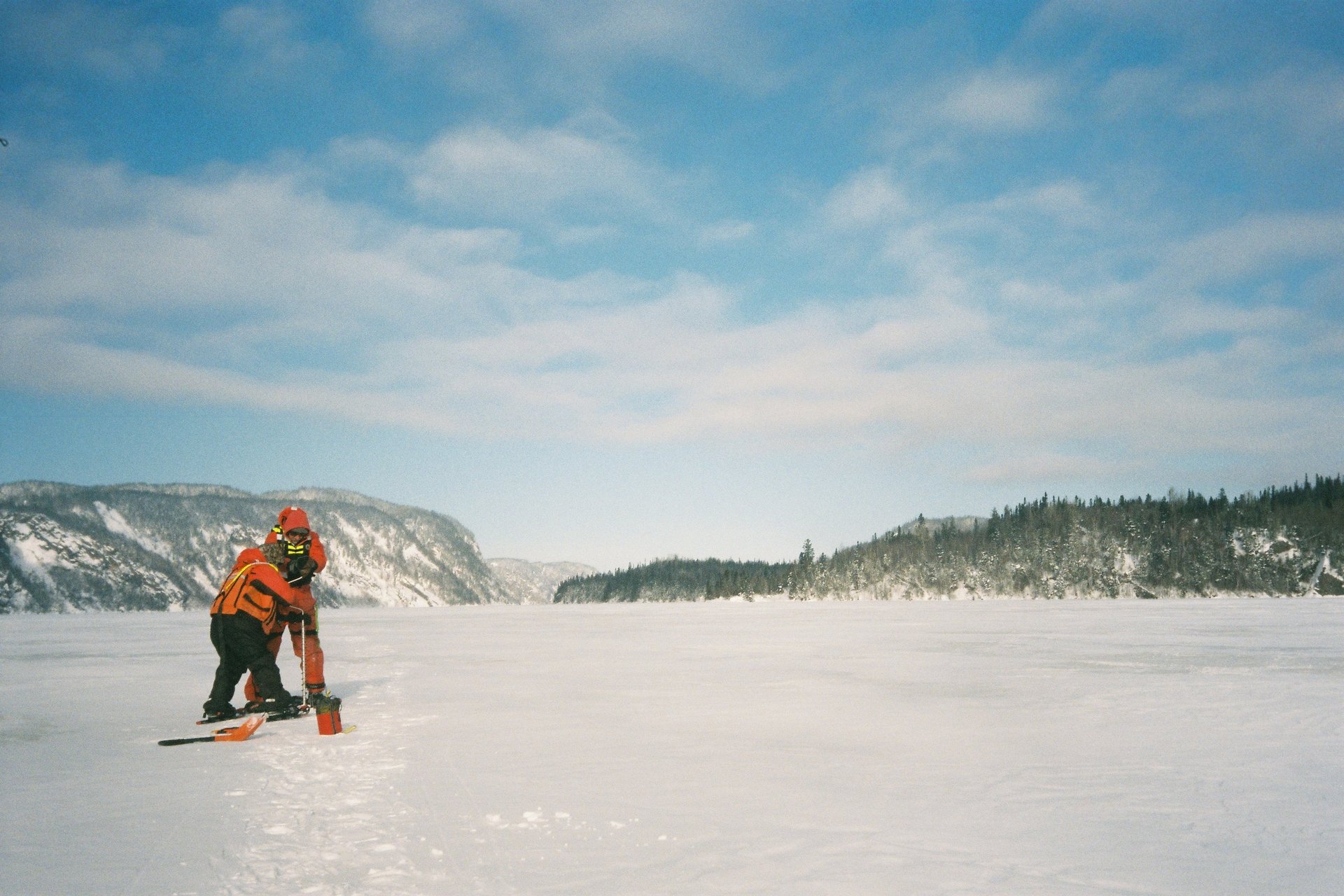
Moreover, in cold regions, lakes and reservoirs are covered with ice for several months each year, which modulates exchanges of water, gases, and energy with the atmosphere. In addition to significantly affecting the regional climate, all these properties mean that lakes and reservoirs of all sizes evaporate substantial amounts of water, which then becomes unavailable to water resource managers.
Lakes and reservoirs
The hydrometeorological behavior of lakes and reservoirs differs from that of soils in several ways: large heat storage capacity, enhanced mixing driven by hydrodynamics, low albedo in summer and high albedo in winter, and an “unlimited” supply of water during the open-water season, among others.
To better understand the processes that govern evaporation, we rely on comprehensive measurements of energy exchanges between the water surface and the atmosphere, including continuous monitoring of the thermal regime of the water column.
We are also interested in ice formation on lakes and reservoirs, which we characterize using local measurements as well as satellite monitoring. We are also working to quantify the impact of creating a hydroelectric reservoir on the local radiation budget and on greenhouse gas emissions.
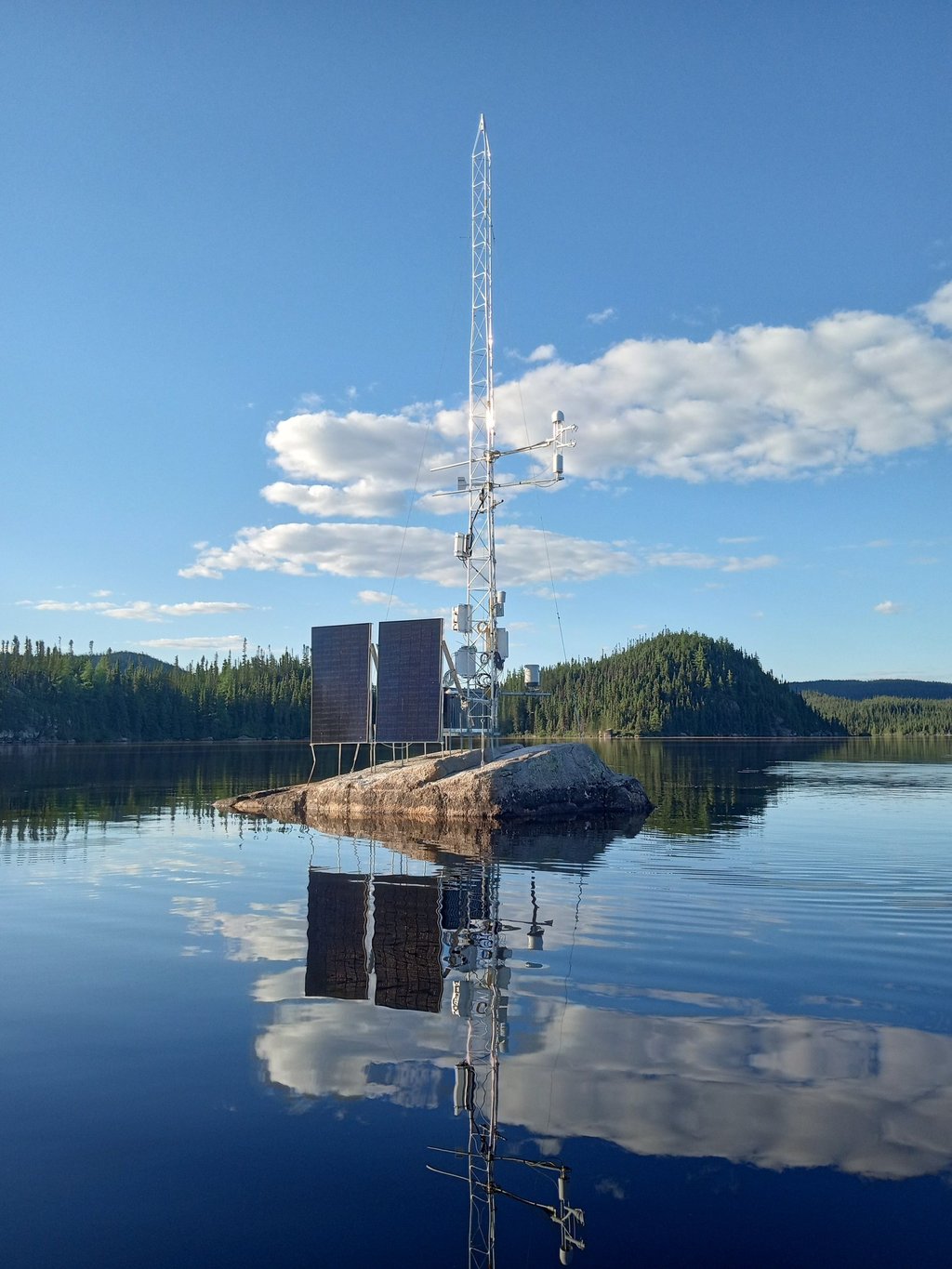
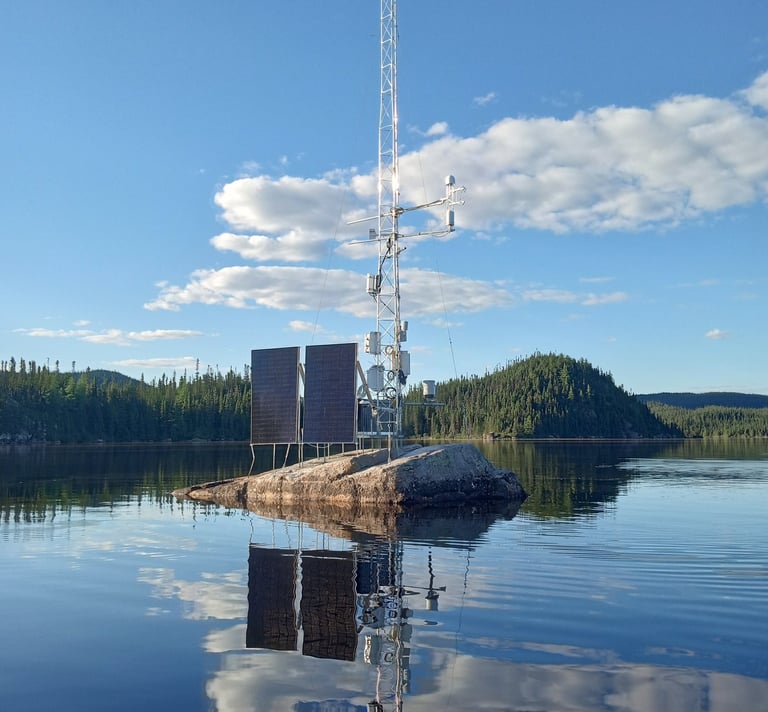
Flux tower near the Romaine-2 reservoir (photo credit: Antoine Thiboult)
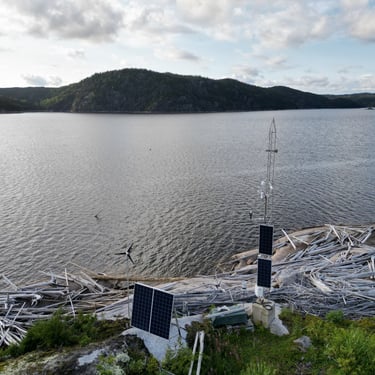
Flux tower, reservoir intake, and precipitation gauge near the Romaine-2 reservoir (photo credit: Hydro-Québec and Antoine Thiboult)
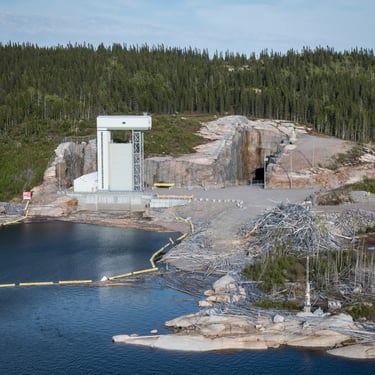
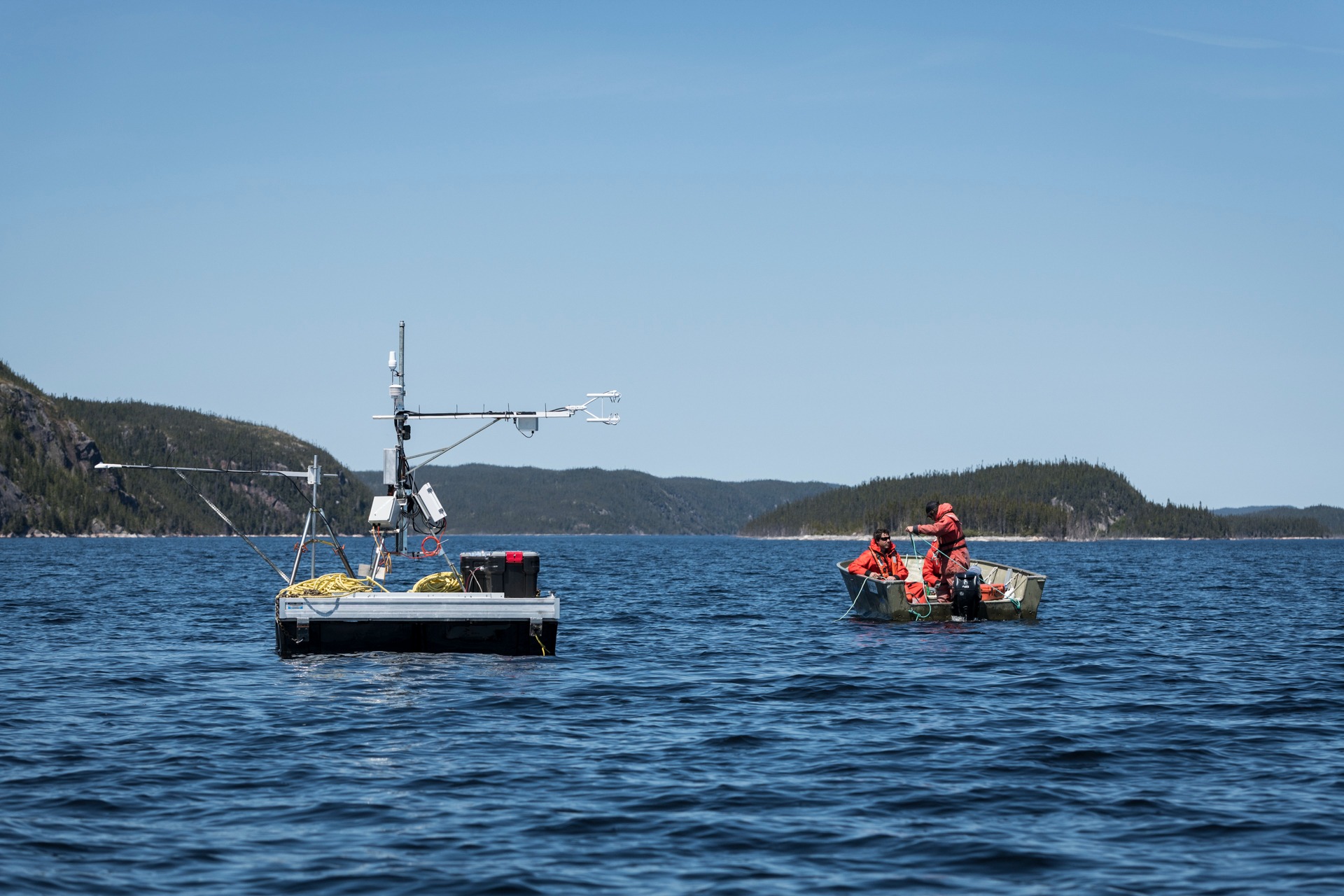
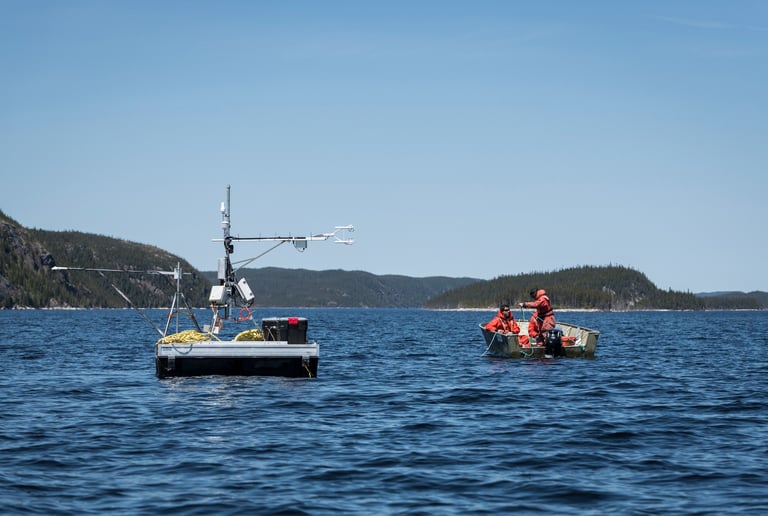
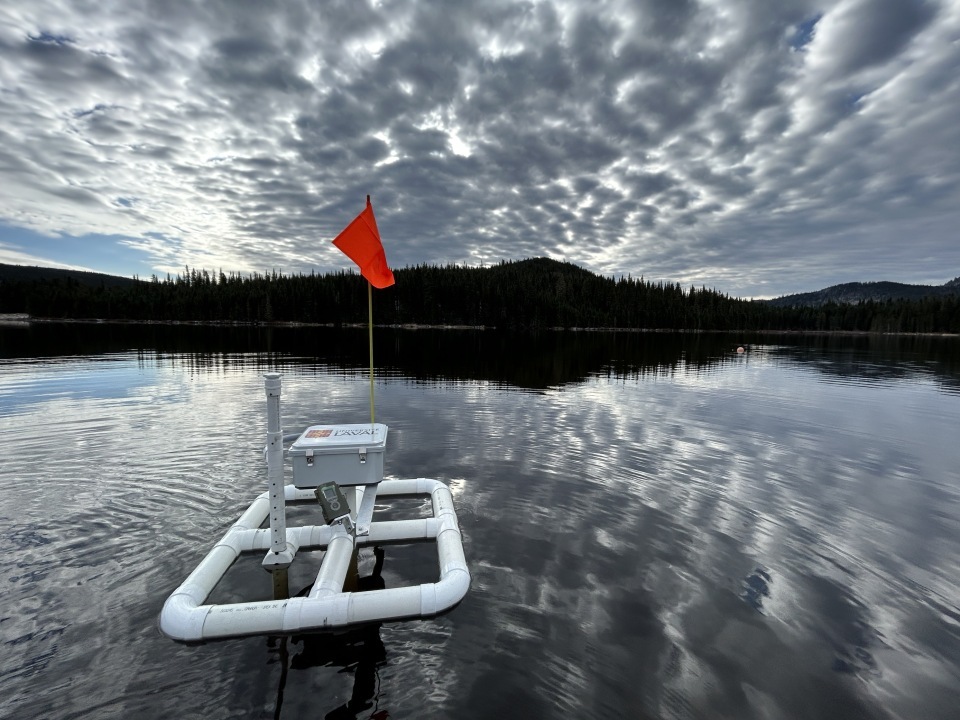
Instrumented floating dock on the Romaine-2 reservoir (photo credit: Hydro-Québec)
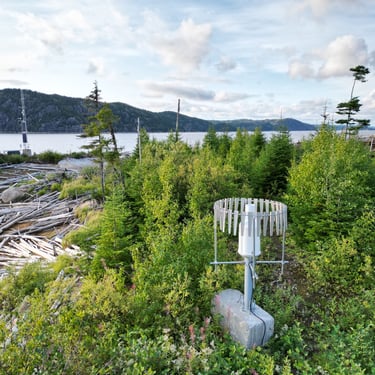
Flux tower at Lake Bernard (photo credit: Antoine Thiboult)

Ice and snow temperature profile
See the work of Thomas Brady
This video shows the structure of the ice cover on Lake Bernard in March 2025. It highlights, among other things, the air bubbles trapped during ice formation, as well as the layering of two types of ice: clear ice at the bottom (thermal ice) and whiter ice at the surface (snow ice).
Contact
© 2026. All rights reserved.
Pavillon Adrien-Pouliot
1065, avenue de la Médecine
Québec (Québec) G1V 0A6